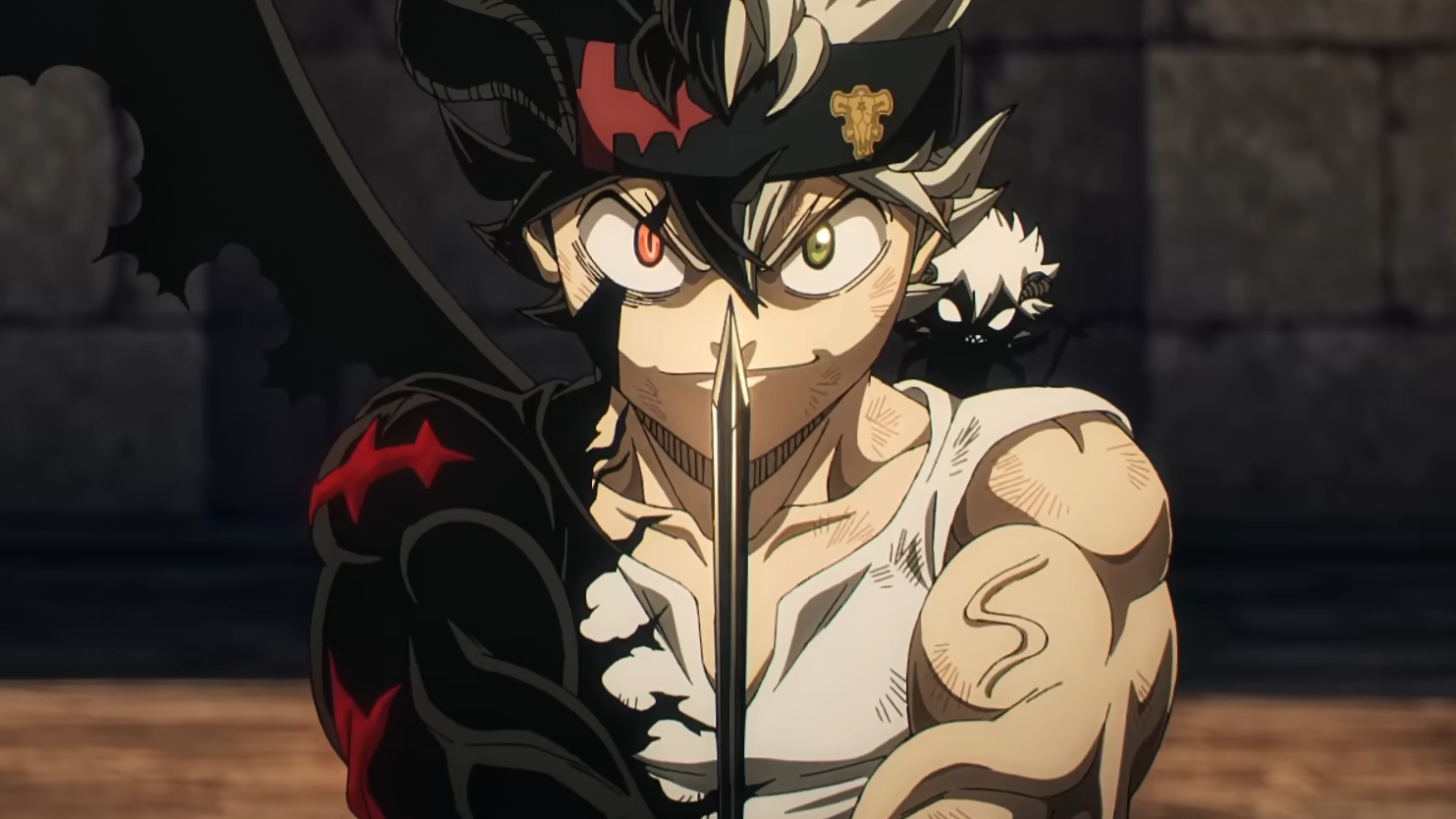
Black Clover returned after 5 years this Fall with Season 2, bringing with it the return of many fan favorite characters, plenty of exciting action, and impressive art and animation. At this year’s New York Comic Con, the series hosted a panel during which fans were treated to a special screening of Season 2 as well as appearances from both Asta’s Japanese and English voice actors, Gakuto Kajiwara and Dallas Reid, respectively. The voice actors did a brief Q&A with questions about the series and live dubbed multiple major scenes from the anime to the delight of the fans in attendance. During the convention, Anime Corner had the opportunity to sit down with both voice actors and discuss their experience working on the series and bringing Asta to life.
Portions of this interview have been lightly edited for clarity. This interview was conducted with the assistance of an interpreter.
Q: Both of you have played Asta for many years now, and of course Asta has changed a lot over the same number of years. Looking back at the history of your performances, what change in Asta resulted in the biggest adjustment for you in terms of your voice acting?
Gakuto Kajiwara: Asta really grows both mentally and physically. He gets stronger. It’s almost like my career. My voice acting career started with this role, so as I see him grow and become bigger and better, I feel like I have to match his growth. And sometimes I feel left behind because he goes on and becomes stronger and better. But I use that as a motivation for myself, so it’s almost like his drive — Asta’s drive — is driving me as well.
Dallas Reid: For me, I would say the biggest change in the way that I play the character from where we were in the beginning to where we are now is that as he encounters more and more people and as they grow to respect him, he feels to me at least like he loses the sense of urgency to prove himself, and he kind of dials back the energy or uses that energy in different ways. He’s no longer shouting to be heard. He’s shouting because he has something important to say. Just different ways of yelling (laughs).
Q: Are there any idiosyncrasies or special Asta quirks that have become second nature now that were particularly difficult early on?
Gakuto Kajiwara: If you watch the series from the very beginning in Season 1, any word that he utters is always so loud. He’s very expressive with his emotions and I am not like that. I am very different from Asta, so to be expressive that way and to be loud and to be strong — that was just difficult for me in the beginning.
Dallas Reid: There is — at least in the way that I play him — there is a difference between when he’s yelling because he’s battling, when he’s yelling because he is trying to get a point across, or he’s yelling because he’s just genuinely angry or scared. And I call it the tea kettle. And that has was very difficult at first, like when he gets extremely high pitched. Like when Yami grabs him by the head for the first time, or when getting into it with Klaus in the in the the dungeon arc. That stuff was a lot harder at first, and eventually it just became, like you said, second nature.
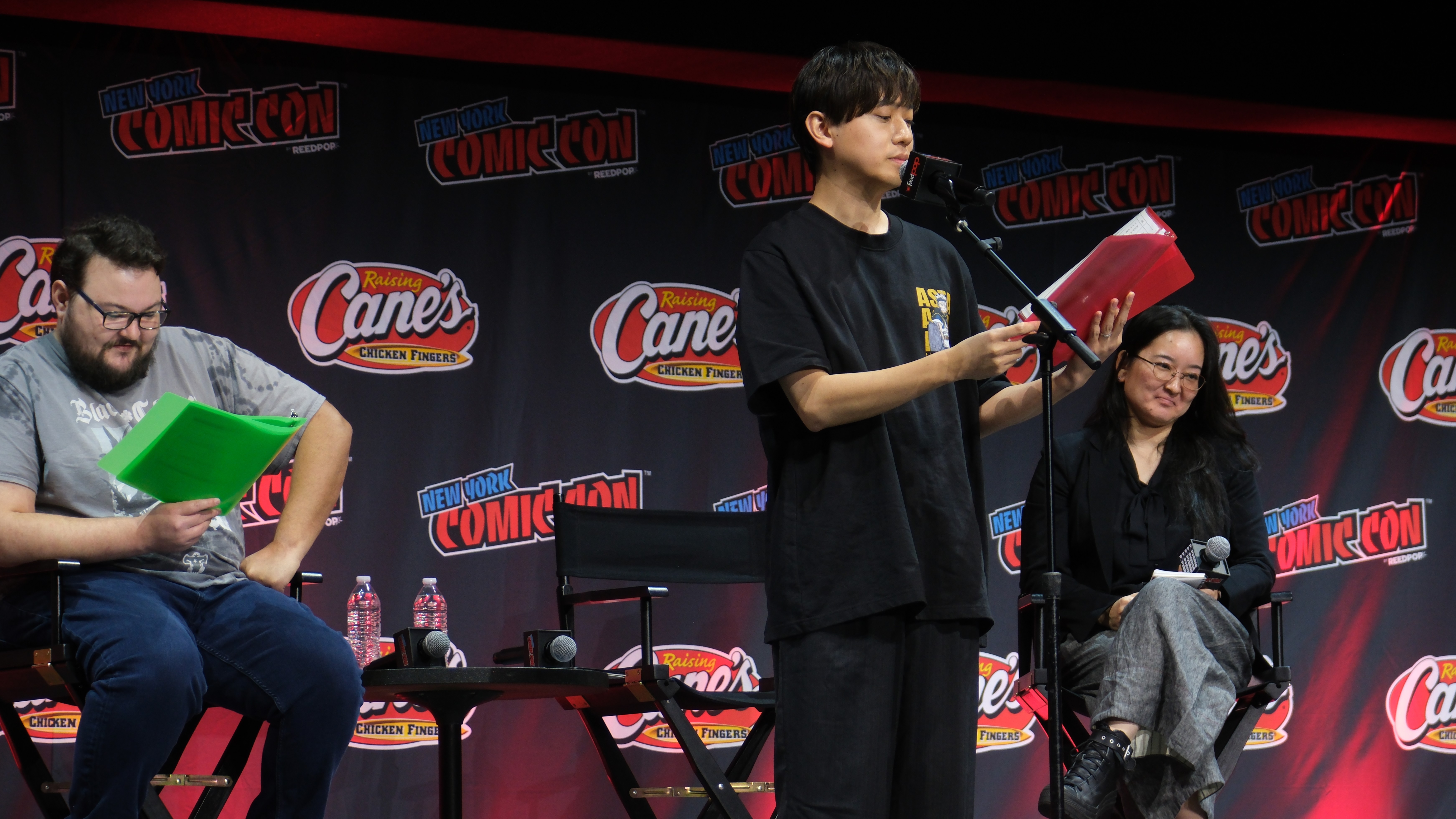
Q: Have you both had the opportunity to hear multiple scenes performed by the other — either at conventions or otherwise — and has anything above the other’s performance ever inspireed you to make a change to how you approach Asta?
Gakuto Kajiwara: Today was the first time.
Dallas Reid: I have heard literally every line that made it to print from him because that’s how we record in the dubbing industry, at least at Crunchyroll, is we will hear it in the Japanese first and then come in to record our take in English. So every single line that Kajiwara-san has laid down for Asta has influenced my performance. Because at the end of the day, we’re trying to stay faithful to the original Japanese audio, so every session builds off of him more and more. I would say that you wouldn’t have my version of Asta if it weren’t for him.
Q: Dallas, do you feel your personal interpretation of Asta has become something more independent in Kajiwara-san’s performance as the series has gone on? Any ways in particular?
Dallas Reid: I would say that I have found my version of the character, but again, we are trying to stay faithful. But I do think that obviously my voice is just naturally kind of deeper, and if I’m going to make those sounds, they have to come from a deeper place, otherwise I will destroy myself. So I would say that my battle yells have become my own, whereas in the earlier episodes, I was very much just kind of trying to, with my tone, match the noises that he was making. But now those fights are mine. I do those on my own. I’m listening for timing, but I know the rodeo now.
Q: Asta and Yuno have both established themselves amongst a long list of legendary shonen rivals. When approaching their relationship and the emotions between them, what are some unique points you tend to focus on emphasizing in your performance?
Gakuto Kajiwara: Asta and Yuno were born in the same place and grew up together and shared the same dream — the same goal. So I drew from my own personal experience of, let’s say voice actor friends who debuted around the same time. Seeing how they move ahead in their career and wanting to catch up and surpass them. It’s a bit of a rivalry. So I draw from that and try to express how that feels with my voice.
Dallas Reid: One of the things that I try to make clear in my performance — and Micah [Micah Solusod] and I, we know each other personally, so we have a pretty good relationship — there’s no bad blood between the two of them. And their relationship is established before the show even really begins, so there’s no need to focus on how these characters affect each other, and how their relationship changes — because their relationship is never going to change. They were brothers when the show starts. They love each other very much. They want each other to be the best version of themselves that they can be, and that is just it. There’s no bad blood — that is the main thing that I tend to focus on. So, even when they’re yelling at each other, and they’re getting in each other’s faces, they’re always going to smile and fist bump at the end of it. And what’s important to me when I play the character in scenes with Yuno is that they’re just ribbing each other. They’re just brothers. Nobody’s actually mad.
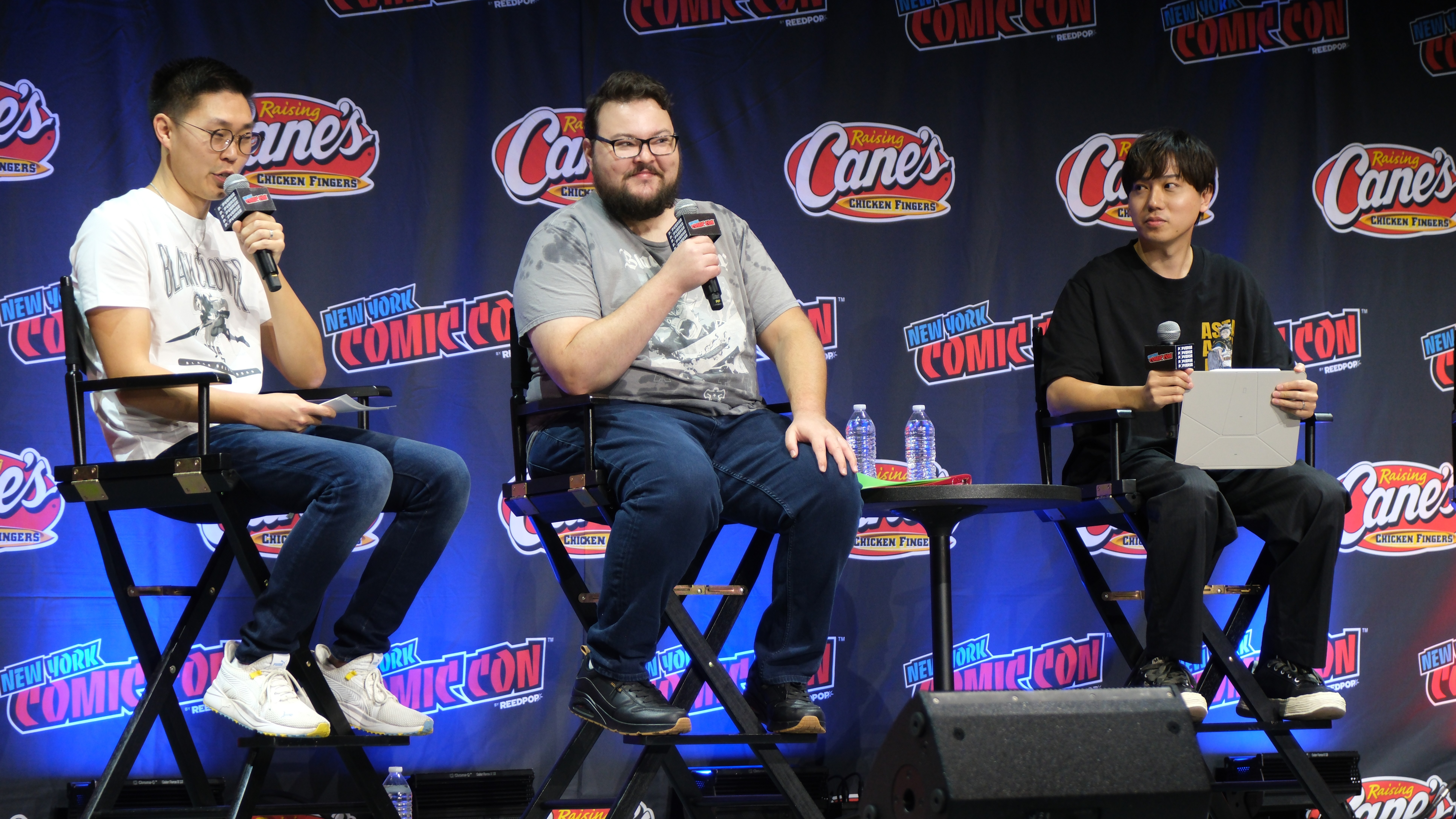
Q: Kajiwara-san, when you and I spoke at Anime Expo, you said that Asta brings together his friends and comrades to defeat enemies he can’t defeat with his own power during Season 2. For you and Dallas, what was the moment where you think Asta truly realized relying on his comrades wasn’t a weakness? Did it lead to any explicit changes to your performances?
Gakuto Kajiwara: Asta, from the beginning, has such a strong heart. He seems like he’s always leading the group — running the top of the group — and leading the rest of his friends. But I think he has always known that he couldn’t do that all by himself. It wasn’t really about realizing that relying on his friends isn’t weakness or anything. It’s more like his will — his want and need to be stronger can only be achieved with the support of his friends. I think it’s a more of a realization on that.
Dallas Reid: I feel similarly, aside from the the leadership perspective. I don’t feel like he’s ever been a leader. He’s certainly postured as one and he’s certainly tried to be one. I think the grimoire ceremony to him was his chance to show that he was going to be capable of something. And he’s always relied on people. He’s always known that you have to — his whole thing in the beginning of the show, I think, is seeking an opportunity to be the person that others can lean on rather than somebody who has had to lean on others his whole life. So he’s always deeply known that you have to rely on your friends to get stronger and move forward. He just desperately wanted to be one of those people for someone else, and now he is. And I would say that him having less to prove is what’s changed my performance.
Q: There’s a 5 year gap between the previous season and Season 2. How did it feel picking up the voice? Did you have to settle back into Asta or did it feel natural?
Gakuto Kajiwara: It’s almost like Asta never left. Asta was always in me over the last five years. I recorded as him for 178 episodes, so it’s sunk into me. It’s a part of me, and I don’t think that he will ever disappear from me ever. We experienced happy moments and pleasant moments together. We all went through that together, so he stays strong within me. And no matter how much time passes, I don’t think it’ll be hard for me to step into him.
Dallas Reid: I had a different experience. I was terrified when I found out that it was coming back. Obviously, I was excited because we’re gonna get to continue the story. We’re going to get to give the fans what they want. After the initial announcement, I was pumped. And then once it got closer to the recording date, I just got more and more and more nervous that I was not going to be able to do it. And then I walked into the booth. Five years later, new director. All that stuff. I was scared out of my mind. We hit the first cue — and everybody who told me not to worry about it was exactly right. He came right back. It was like greeting an old friend. I walked into the room, the beeps went off, and it was like Asta tapped me on the shoulder and went “Let’s do this big dog” (laughs). And he came right back to me. But I was so, so, so, so worried that he wouldn’t. So I thank him every day.
Q: I know you both have been asked about Asta’s screaming thousands of times, so I won’t ask about what doing the screaming is like. Instead, I’d like to know: do you think the screaming reputation obscured his true character, and do you think he’s evolved past that reputation?
Gakuto Kajiwara: The screaming element is one element that makes up who he is, but I think it only scratches the surface of who he is. Asta has this weakness under all of his layers, and it’s just hard to see. It doesn’t come up, he doesn’t talk about it. But he has this feeling about his upbringing, his family, and not having magic growing up. But all those parts make Asta as a character more human, because of all of the other things. We tend to think that Asta is a superhuman type of character, but he is human, and I think you’re gonna see that side of him more in Season 2.
Dallas Reid: I wouldn’t say that the yelling obscured his character. I would say that it is just something that a lot of people early on were not willing to look past. Who he is has always been available to the audience should they choose to look for it. But for whatever reason, when the show first initially came out, people decided that he was just too loud to be worth anyone’s time. But as the show went on, and more and more clips started making the rounds, I started seeing more and more people being like “Wait, this is the show I decided to hate, because it was cool at the time to hate it?” I would say that he’s definitely far surpassed that reputation at this point and will only continue to grow more as we continue with the story.
We’d like to thank Gakuto Kajiwara and Dallas Reid for taking the time to speak with us during New York Comic Con and thank the staff of the convention and the folks at Crunchyroll for assisting with coordination of the interview. Black Clover Season 2 is streaming now on Crunchyroll.
©YUKI TABATA/SHUEISHA,TV TOKYO,BLACK CLOVER PROJECT

Join the discussion
Comments are linked to your Anime Corner account and published after moderation.
Sign in to comment
Use your Anime Corner Portal account across all Anime Corner services.