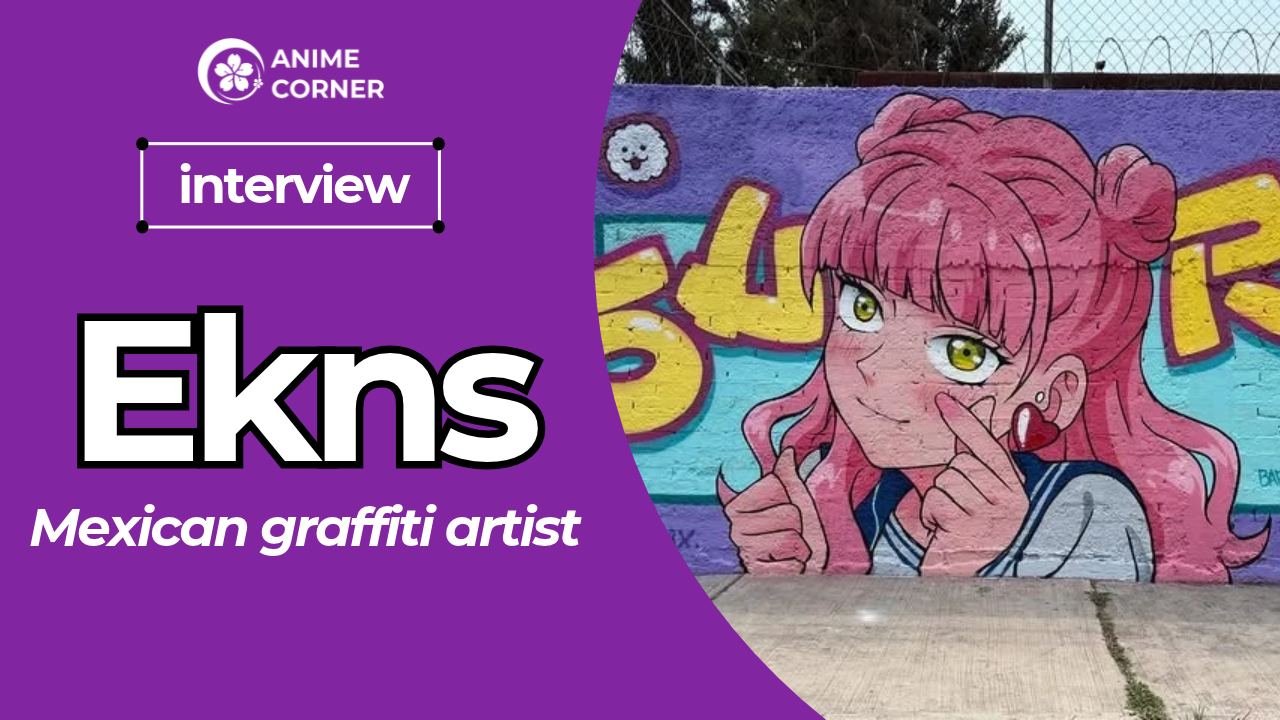
If you’re an otaku with a penchant for street art, you already know Ekns, even if you don’t know him by name. He’s the artist behind the viral Frieren, You and I Are Polar Opposites, and Uma Musume murals that have sprung up all over Mexico City.
We had the opportunity to chat with Ekns and explore how anime shapes his work, his approach to street art, and how his illustrations add to the vibrant feel of Mexico’s urban landscapes. Here’s a glimpse into his magic:
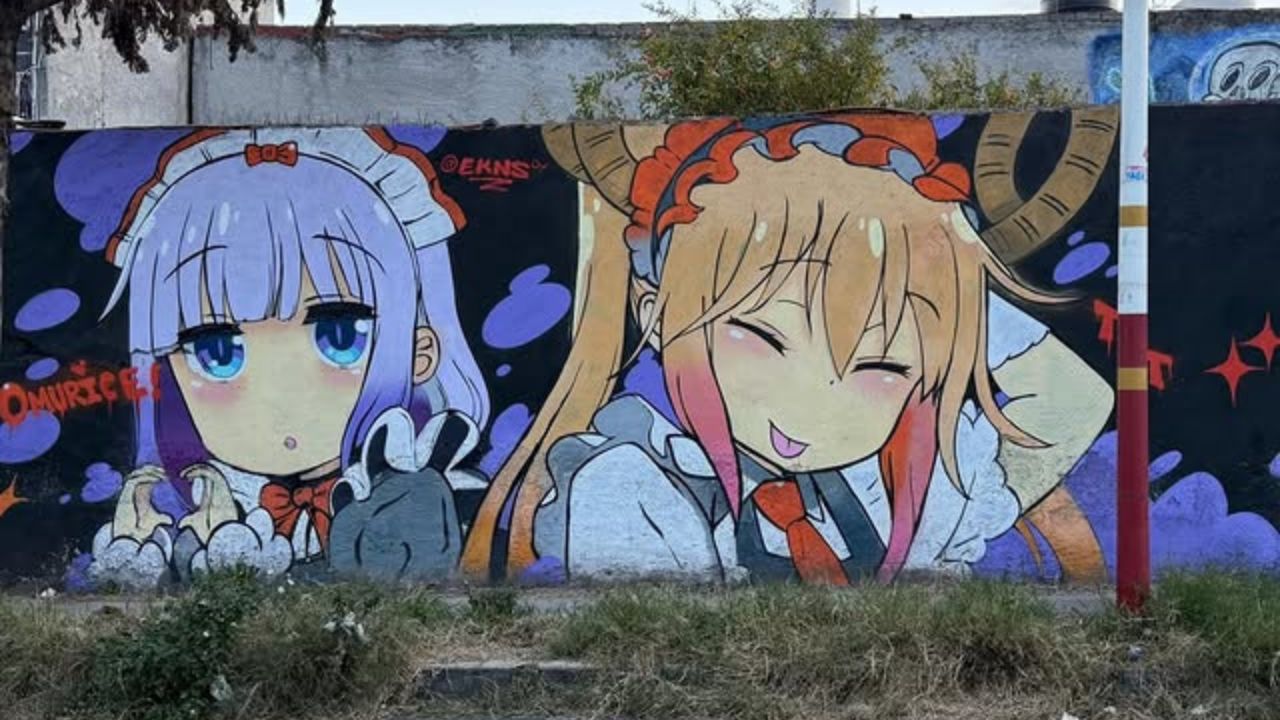
This interview was translated from Spanish.
Q: What is the origin of your artist’s name, “Ekns01”?
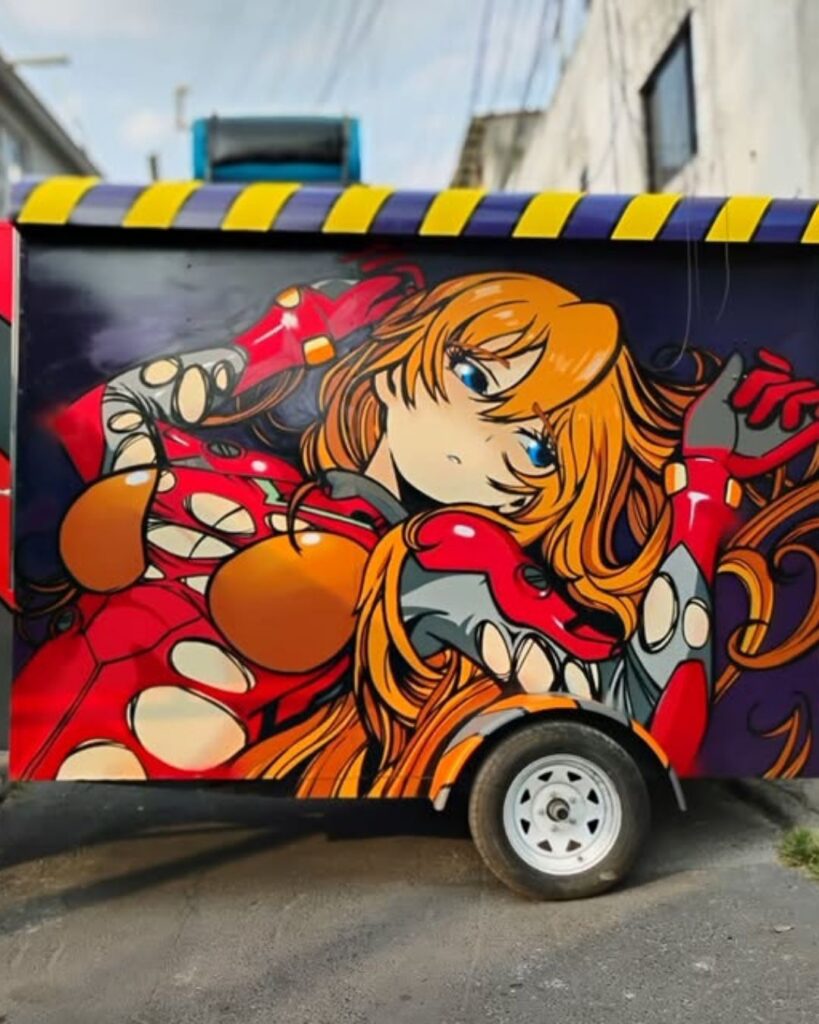
A: The number “01” is inspired by EVA-01, the mecha from Neon Genesis Evangelion, one of the first anime I ever watched. “Ekns” is a handle that comes from a previous artist’s name from back when I did pure graffiti. At the time, I had a project with a former partner, and my alias was “Senk,” which stood for “sentir, escribir y nunca caer” (“to feel, to write, and to never fall”).
I included the word “write” because, in the graffiti world, there’s a subculture known as “writers”—artists who specialize in lettering and have a more poetic approach—even though nowadays I focus mainly on murals. When I launched my solo project, I simply rearranged those letters. “Ekns01” serves as a reminder to keep doing what I’m passionate about and never stop.
Q: Why did you decide to step into the mural world?
A: I wanted to try new things and make a name for myself with a different kind of creative output. I also felt like taking on more complex projects and stepping out of my comfort zone beyond traditional “writer” graffiti lettering.
Q: Mexico is known for its rich muralism tradition. From your perspective, how do you distinguish a mural from graffiti?
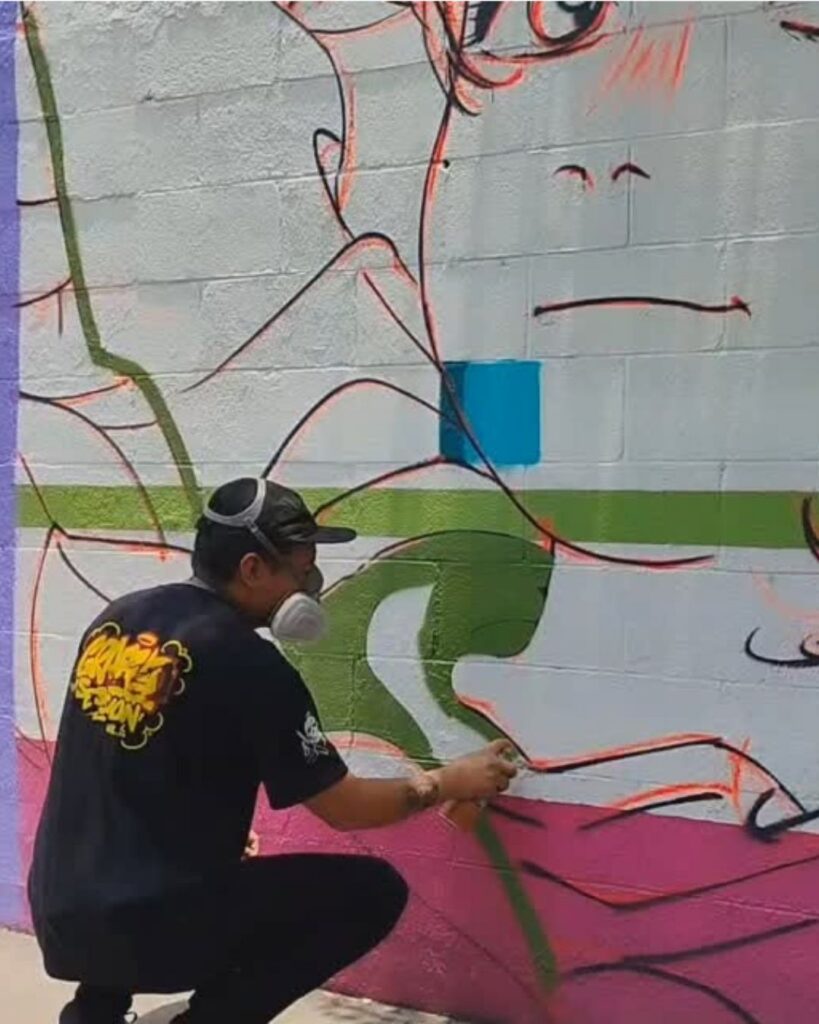
A: Each originated in a distinct cultural context. For example, graffiti has traditionally been more about competition or gaining visibility, among other factors, whereas murals are tied strictly to an artistic purpose. That said, the definition of graffiti is constantly evolving—it depends on how the artist chooses to grow. In my case, my time writing graffiti is what allowed me to discover the world of murals.
Q: Was it always clear to you that you wanted to paint anime character murals?
A: At firs, I didn’t have a clear idea t, but later on, I started watching more anime and discovered many characters that sparked a real emotional connection, giving me the drive to paint them.
Q: Anime characters have very expressive gestures and distinct art styles. How do you approach those differences when designing an illustration? Is it difficult to translate anime onto a large wall?
A: I start with several illustration options and pick the one I like best. Then, I redesign it with my own personal style, check for any errors, and translate it onto the wall. The wall itself tells you whether an illustration works or not, so quite often I have to look for a new concept tailored to a specific space.
Q: How do you determine whether an illustration fits a wall?
A: I project it using my phone. I take a photo of the wall and overlay the illustration on top of it, which helps me visualize right away whether the design works in that space.
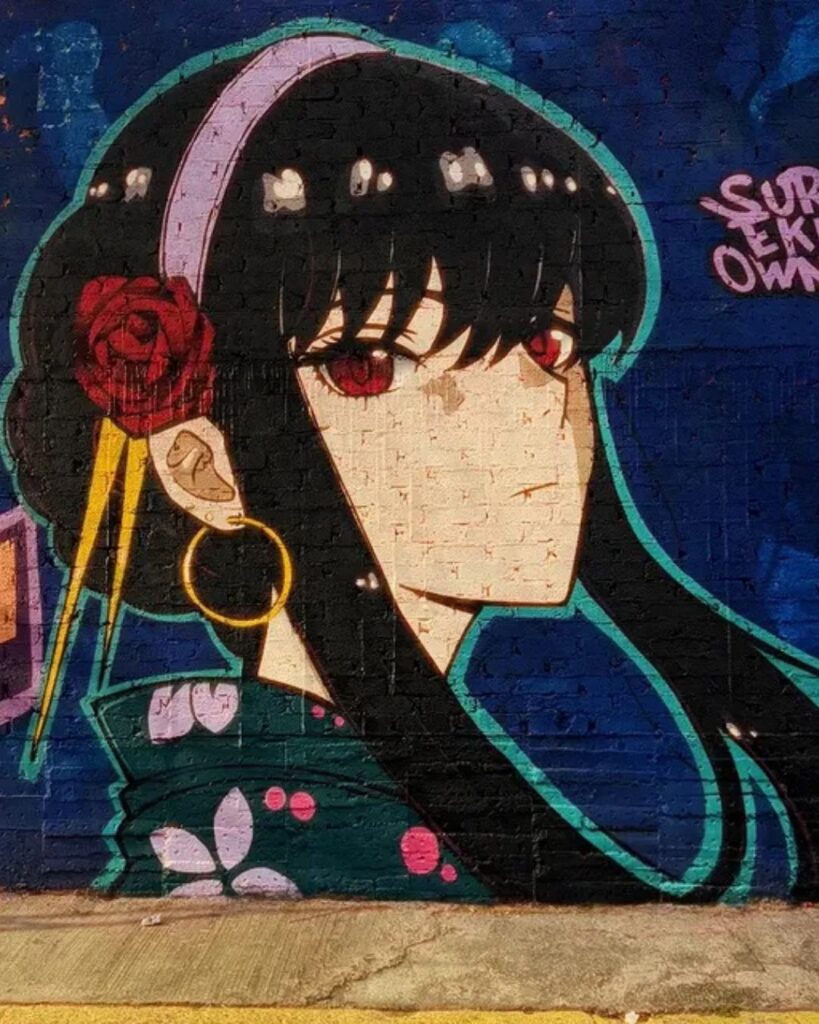
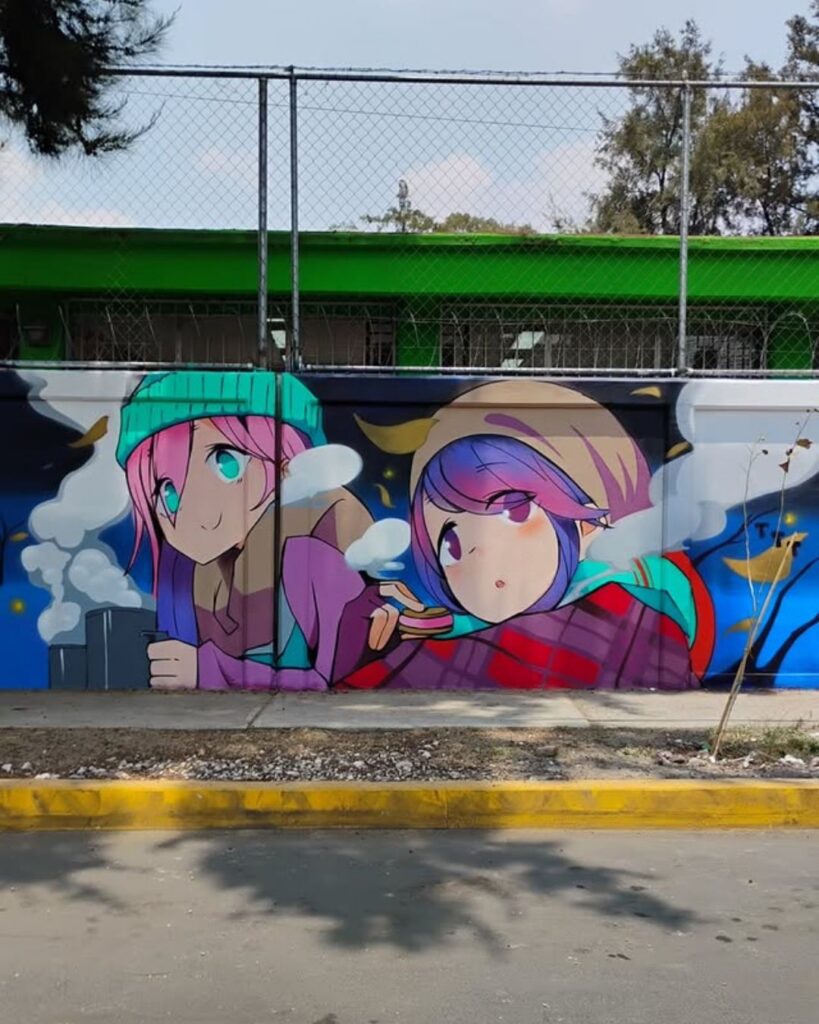
Q: Do you take into account other elements of the environment that aren’t strictly part of the mural?
A: Yes. In fact, right now I’m working on a project at a school, so I selected school-themed characters that fit the academic setting. On another occasion, I was invited to paint a bar that already had a lot of items hanging on the walls. At the time, I was watching Bocchi the Rock!, where the main character, Hitori Gotoh, loves hiding in small, cramped places. I asked the bar owner, “Which is the most hidden wall you have?” He pointed to a corner with exposed brick, which is where I ended up painting Hitori Gotoh.
Q: How many years have you been creating anime character murals?
A: About 3 years now, which is how long my Instagram account has been active.
Q: On average, how long does it take you to complete a mural?
A: For instance, my Tokai Teio mural took me two days to paint because of all the detail. Other murals have taken me just a single day to paint, like the one of El Condor Pasa. However, there are preparation factors prior to painting that affect the timeline, such as planning and acquiring materials. For El Condor Pasa, I already had all the necessary supplies on hand. If I decide to switch characters mid-process, it means buying new materials.
I already have a list of upcoming murals commissioned, which will require a lot of materials. I use a color swatch book as a guide to pick out what I need; if a specific color isn’t available, I have to mix the existing ones.
Q: What is the lifespan of a mural?
A: It depends on the location. Some walls suffer from moisture, so the paint doesn’t adhere properly from the start. But if the wall is clean, protected from direct sunlight or rain, and you use good-quality paint, it can easily last 2 to 3 years in great condition. With regular maintenance, they can last much longer. Indoors, a graffiti can last more than 3 years.
I actually view the change as a positive thing because it opens up space for new artwork—it even lets you see your own evolution when you paint a new piece over an old one. It’s a bit like farming: you have to rotate and refresh the soil regularly.
Q: How did you develop the style you have today?
A: The color palettes, the materials, the structural approach to lettering, and overall the technical foundation I built during my time as a graffiti writer were all translated into my murals. My style is a hybrid of both forms.
I’ve also drawn inspiration from other artists across film, animation, and photography. I pick elements that catch my eye based on the feelings they evoke. It’s crucial to look at a wide range of references.
I always look for a key signature detail from the anime. For example, in my piece featuring Mei from the manga Toilet-bound Hanako-kun, I referenced one of the background scenes where Mei bids farewell to “her other self,” adding blur effects and a red line to represent an intravenous line.
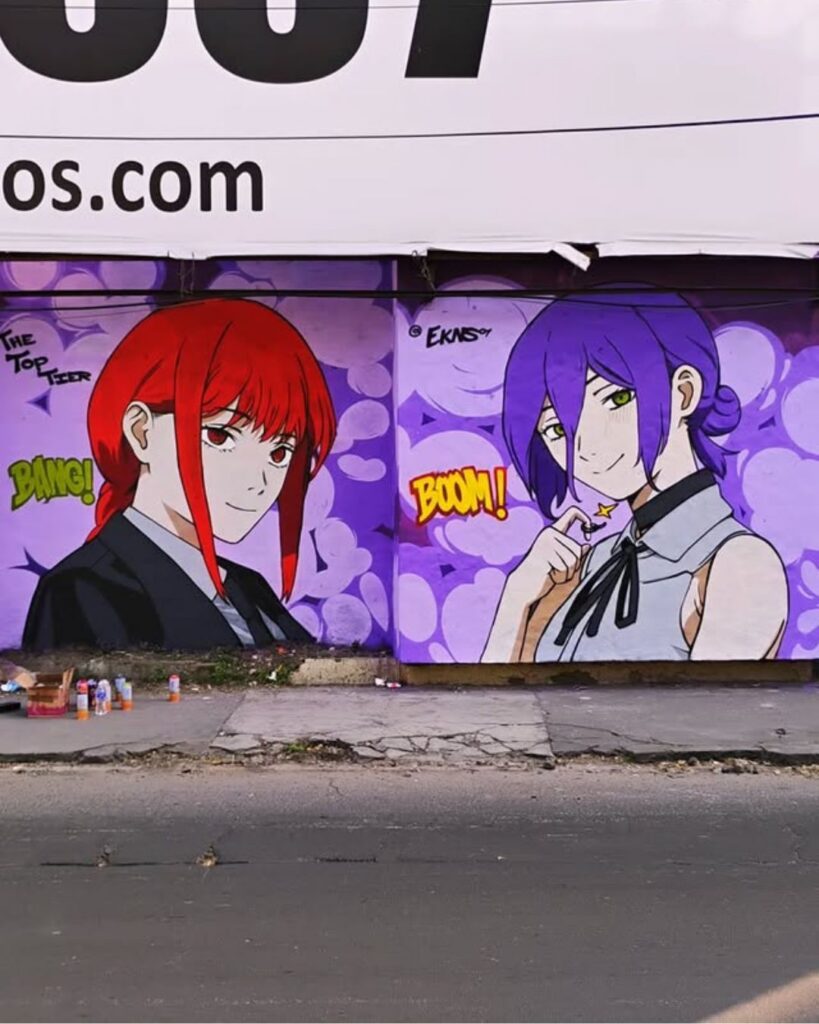
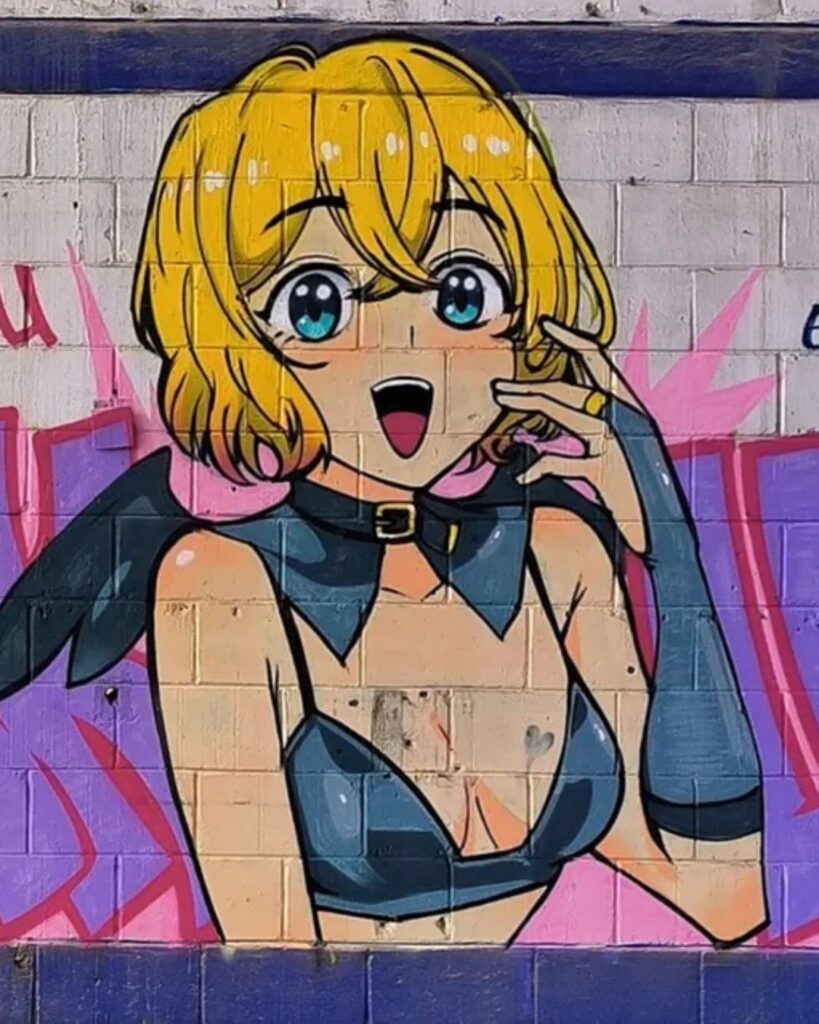
Q: How do you balance your personal style with the original artist’s work when adapting a character?
A: I always respect their work by making the adaptation as faithful as possible—including the colors, gestures, and hand poses. At the same time, I incorporate my own lighting and effect techniques. There are elements you can replicate directly from the source material, and others you have to problem-solve on the spot, whether due to wall conditions or because it involves a technique I haven’t mastered yet.
For example, on the mural I did of Reze and Makima, I introduced specific tones to give the illustration depth. I added a purple background—which isn’t in the manga—to make the characters pop. On a Gachiakuta mural, I worked with grays and added gradients and highlights so the image wouldn’t feel flat. Those subtle details make a huge difference.
Q: Today, do you follow specific criteria when selecting which illustrations to paint, or are most of them commissioned?
A: I’ve always said that I’m going to paint what I personally love—it gives me an extra boost of motivation. For commissions, I respect the client’s wishes, although I’m usually given a lot of creative freedom when adapting the character to the wall. Ultimately, a project comes down to the physical reality of the wall, so I offer my recommendations on perspective and scale. Thanks to my experience, I know what might not turn out well in the final result.
Q: What factors influence placing a specific character in a particular location? Can you share an example?
A: I really want to keep painting characters from Uma Musume, and I already have several spaces envisioned for them. For example, there’s a school with a wall that’s 2.3 meters high. I also found a space at another school that is lower in height but wider, spanning about 4 meters across.
While thinking about which character to put on each wall, I decided on TM Opera O for the first wall. I loved her story, and her vibrant personality fits the spot well—especially since it faces a main avenue and is highly visible to the public.
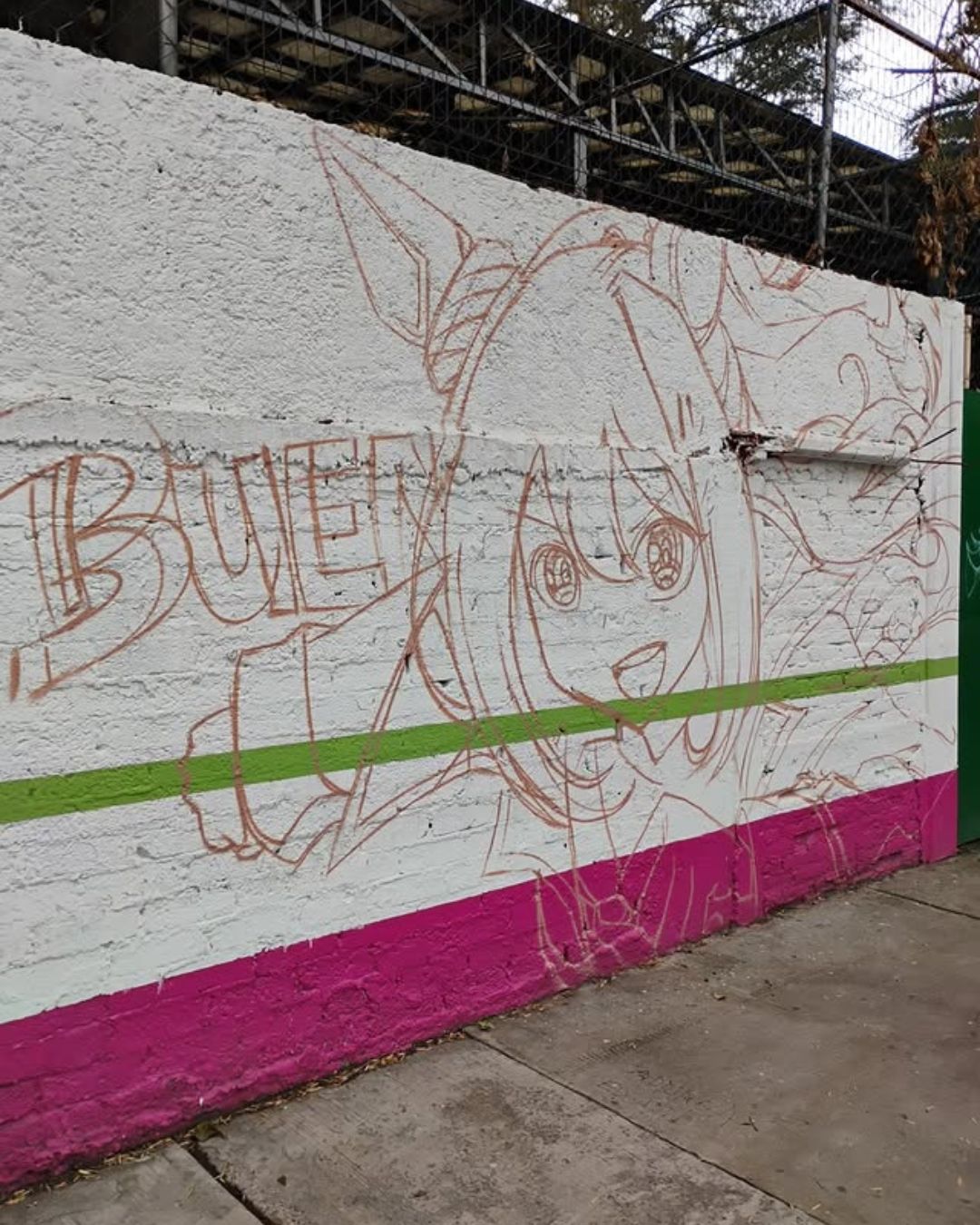
Q: What is the street art scene like in Mexico right now?
A: If you don’t have the owner’s permission, it’s considered illegal since it’s private property. You have to “knock on doors” and talk directly with property owners. In my case, I get permission from a lot of schools. I meet with the principal first and present my sketches. Many of these walls are in poor shape, so I offer to restore and paint them so they’ll allow me to do my personal projects, which I fund out of my own pocket.
I had a disappointing experience with the Tokai Teio mural. I had received approval from the principal, but a local government official informed me that they were going to repaint the entire school building. Even though I explained that I had already invested in materials and secured permission, they painted over it anyway.
After that experience, someone from the borough’s urban planning department reached out and invited me to work with him on a project to paint the whole neighborhood, though under a more traditional cultural theme. I had to politely decline because I wanted to stay focused on anime. Even though we didn’t collaborate directly, he’s also an anime fan and helped connect me with various individuals and organizations so I could paint more murals elsewhere.
Q: You mentioned you worked on a Gachiakuta mural. One of the creators involved is a graffiti artist, Hideyoshi Ando.
A: Yes. It was a project I worked on with a friend. I illustrated Amo Empool, and my friend painted Riyo Reaper.
Q: The manga features a specific story arc centered around graffiti culture. What did you think of it?
A: I loved it. I recognized several real-world techniques that were depicted accurately, down to the mindset and attitude of a graffiti writer.
Q: What is your favorite anime and character? What anime would you recommend?
A: Right now, I really love Frieren: Beyond Journey’s End. I feel like I see a bit of myself in the protagonist, Frieren. I’ve already painted one mural of her, and I’m planning a new one that will be much more detailed with a more thoroughly planned background.
My top anime recommendation is Keep Your Hands Off Eizouken! because it captures the entire animation process and everything that goes into it. Plus, it’s an inviting, feel-good anime that leaves you wanting more.
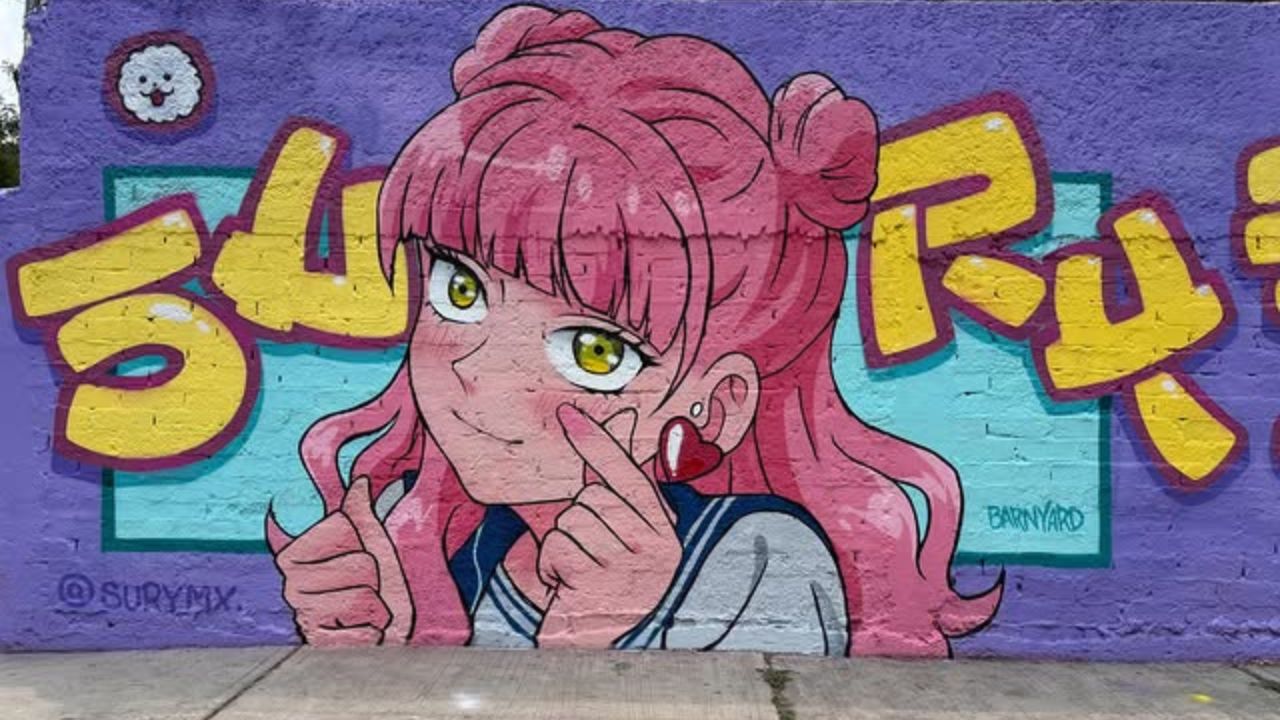
We want to extend our heartfelt thanks to Ekns for this interview. For updates on his art, follow him on his social pages at:

Join the discussion
Comments are linked to your Anime Corner account and published after moderation.
Sign in to comment
Use your Anime Corner Portal account across all Anime Corner services.