During their visit to the German convention AnimagiC, we had the opportunity to talk with Just Like Mona Lisa manga author Tsumuji Yoshimura, Studio SHAFT’s CEO Mitsutoshi Kubota, and CyberAgent producer Manami Kabashima about the upcoming anime adaptation, originally announced under the codename “Project M.” They also took part in a panel where they revealed the first teaser trailer, main staff, and cast for the anime.
In this interview, the team shared some insights into the central role international audiences play for them, and why Studio SHAFT and CyberAgent opted to work on the adaptation.
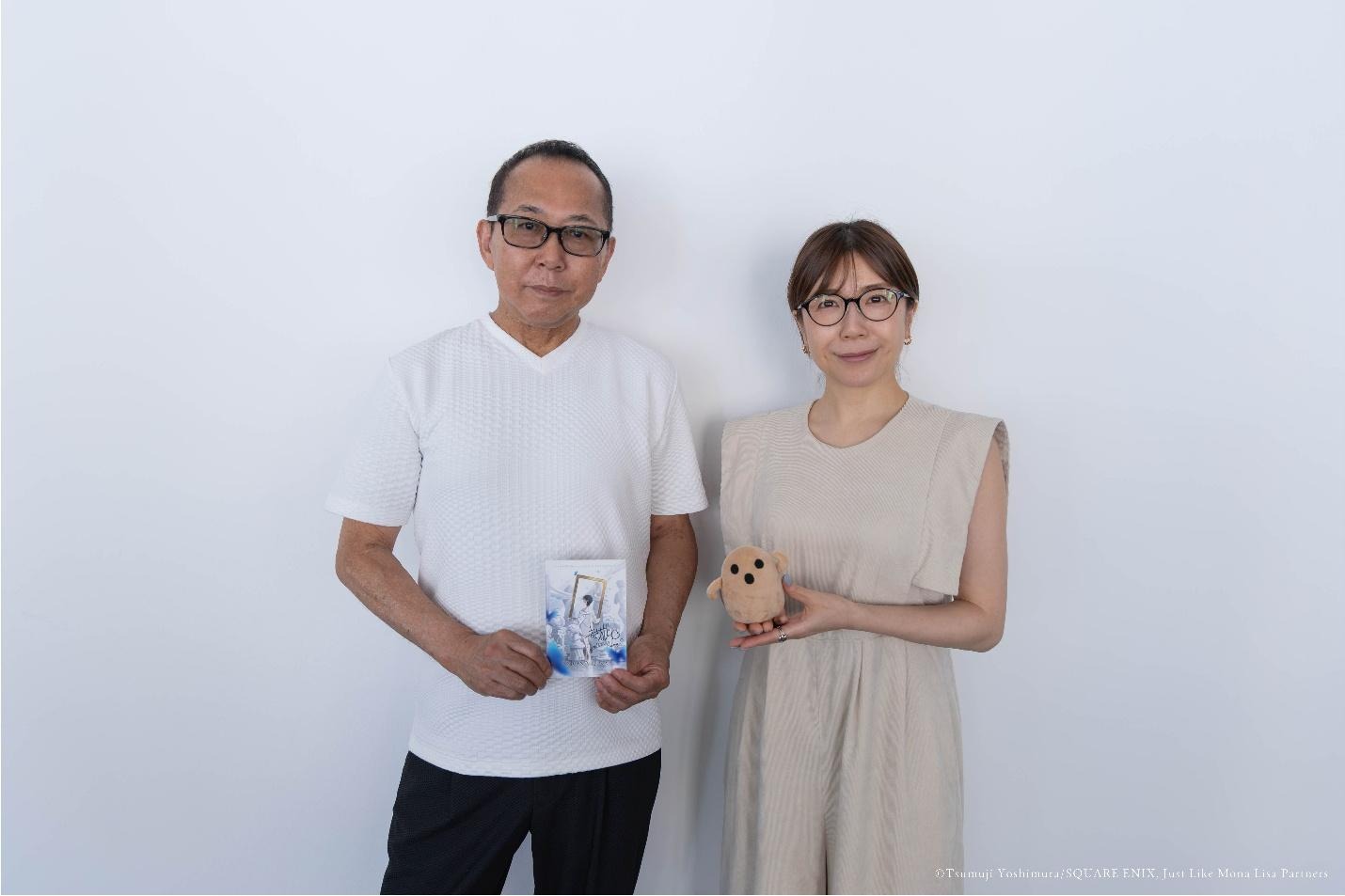
Portions of this interview have been edited for length and clarity. This interview was conducted with the assistance of an interpreter.
Q: The first trailer for Just Like Mona Lisa is making its world premiere here in Mannheim rather than in Japan—that’s remarkably rare for a TV anime. Kabashima-san, why was AnimagiC chosen as the location to unveil the teaser trailer?
Kabashima-san: We heard that the original manga was already popular in Germany. We thought that a premiere in Germany would fit with a place where the manga had this much support and the fans were passionate about it.
Q: Yoshimura-sensei, Kubota-san, what are your impressions and feelings about being part of the trailer revealed at AnimagiC (Mannheim, Germany)?
Kubota-san: I also heard that the manga was very popular in Germany, so I was very curious to find out what the fans thought. The fans were really lovely people and love the manga.
Yoshimura-sensei: I was worried that nobody would know the manga [laughs]. But at the beginning of the panel, when the moderator asked who knew the manga, a lot of people raised their hands so I was relieved. When I was doing the live drawing during the panel, I also received a lot of support.
What also impressed me at the opening gates of the convention was how many fans were queuing from very early in the morning. I was pleasantly surprised by how much Japanese anime is loved here.
Q: I was also present at the convention opening and I saw a lot of people rushing to the queues. Yoshimura-sensei, could you explain Just Like Mona Lisa’s unique premise? What inspired you to create this world?
Yoshimura-sensei: I mentioned already at the panel, it’s a lovely story in which the main character is loved by both a guy and a girl. I originally conceived it as a triangular romantic comedy, but then it would be unfair for Hinase [the main character] to be loved only by one, so I thought that the main character should be genderless. I wanted to tell a story in which people are loved and love each other regardless of gender.
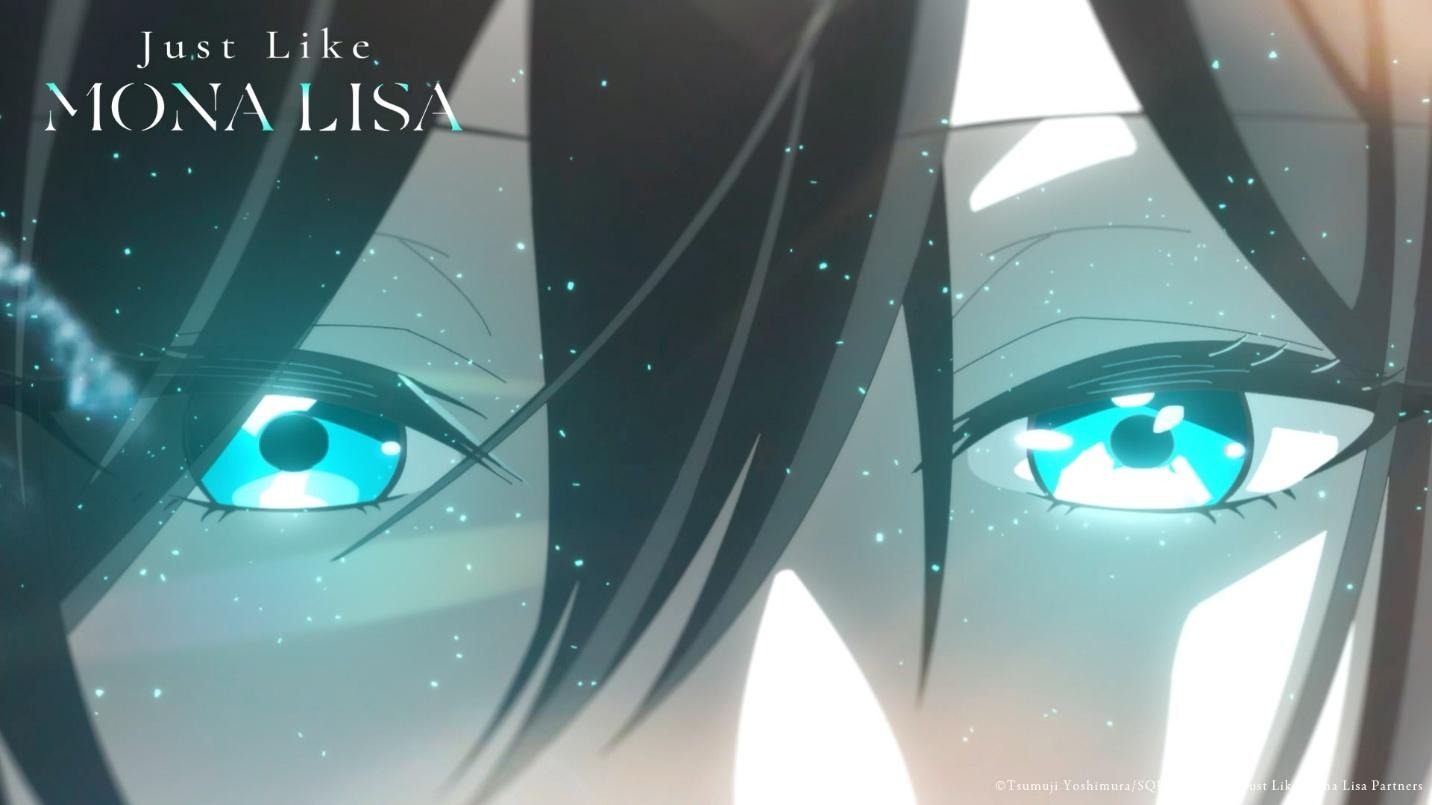
Q: The manga’s signature is the turquoise accent bleeding into black-and-white pages—you’ve said yourself, you’re curious how that translates to animation. Now that you’ve seen material during supervision, what do you think of how SHAFT has interpreted that visual language?
Yoshimura-sensei: I’m really happy with the anime and the teaser, and the care they put into it. It’s very beautiful. Regarding the original version of the manga, the color is not only used for the beautiful scenes but also when Hinase is feeling sick or in different moments. The color is a key element. I’m also very curious how this was finally incorporated as well.
Kubota-san: Thank you very much!
Q: Hinase’s hesitation to choose resonated with readers far beyond Japan, as this weekend has proven. Did the international response to the manga surprise you, and has it changed how you think about the story’s themes?
Yoshimura-sensei: Well, of course I think we have different cultures, German culture is different from Japanese culture, and that means we have differences in the way of thinking. But even in Japan the way Japanese people think is different from each other. I’m curious on how the manga and also the anime will be received here. In the future, I also hope this helps shape my perspective on my own work.
Q: You debuted in Monthly Shonen Gangan in 2013 with UNKNOWN and Classi9. Looking back, what did those earlier works teach you that made Just Like Mona Lisa possible?
Yoshimura-sensei: I think my previous works are pretty different from Just Like Mona Lisa. Yet in Classi9, the most popular character ended up being the androgynous character instead of the main character. For Just Like Mona Lisa, I thought “Maybe this time I should have a genderless main character.”
Q: Kubota-san, SHAFT is celebrated for a very distinct visual grammar—the head tilts, the abstraction, the bold color fields of Monogatari and Madoka Magica. What in Just Like Mona Lisa told you “this is a SHAFT story”?
Kubota-san: SHAFT is a small anime studio so we can’t do many projects at the same time. We are very careful and conscious of what projects to do. The reason why in SHAFT we consider Just Like Mona Lisa an important project for us is that we are very focused on the color. When I read the original manga, color was a key element. All the characters can express emotions through color. We thought it would be interesting to express this through animation.
Q: This adaptation lands in SHAFT’s 50th anniversary year. What does this project represent for the studio at this milestone—continuity, or a new direction?
Kubota-san: Well, 50 years sounds like a milestone, but it depends on where you set your goals. The goals are always in the future. We are always looking for new ways of expression and directing a piece. Of course, that’s based on the experience we have gained over the years, but we are also looking for new experiences. We are still looking for new ways of expression.
Q: The source material thrives on quiet interiority—hesitation, ambiguity, silence between characters. How does a studio known for visual maximalism approach a story this restrained?
Kubota-san: We create animation—moving images as entertainment— so we adopt this ‘visual maximalism’ approach because there’s a lot of information in a piece. You can watch it several times and still discover new things in the background.
The challenge for SHAFT this time is how to have a maximalism within the quietness of the story. I think we can achieve this by being very detailed in the drawings and still conveying enough information. There’s different ways to convey emotions, like with music.
Overall, we are trying a new approach since this is a challenging project for us. All the sections of the studio are focused on developing this quiet story since, in a way, it can also be considered a dense story. We are also putting a lot of our craft and technology to develop the sensitivity of the characters. In that sense, we are conveying a lot of information through the animation.
Q: Kabashima-san, CyberAgent teased this adaptation for a year as “Project M” at Anime Expo 2025 before the full reveal. From a producer’s perspective, what did that long runway of secrecy accomplish?
Kabashima-san: The original manga is already concluded, so we thought there was no point in revealing it in the usual way. We titled it ‘Project M’ as a way to say “We have a new start” with the animation. So we announced the project at Anime Expo 2025. Our strategy is to announce first abroad and then bring the information and feedback back to Japan.
Q: Choosing a European convention for the trailer and cast premiere signals a very deliberate international strategy. How central is the overseas audience to your strategy for the positioning of this series?
Kabashima-san: It’s not that we focused solely on one country, but we thought of AnimagiC as a place where the passion is very high. We also thought that AnimagiC was a good starting point for our campaign.
Q: What drew CyberAgent to this particular manga among Square Enix’s publishing catalog—the illustrations, the themes, or something else?
Kabashima-san: We thought that falling in love with someone, liking someone, or having someone you think about, are universal feelings. By portraying how all the characters—not just Hinase—move forward through their own struggles, we thought it would be nice to create an anime that global audiences can relate to, and that is why we chose this project.
Q: What can fans look forward to next from Just Like Mona Lisa after AnimagiC? Is there anything you’d like to say to the German and international audiences here today?
Yoshimura-sensei: The staff from both CyberAgent and SHAFT gave their best in every aspect to make a beautiful piece, so please look forward to it.
Kubota-san: The theme of the story is that the main character is genderless and of course this isn’t our real world, but a unique world in which the story develops. I think that teenagers can actually relate to that.
You have a lot of roles during puberty, you care about your friendships, you have doubts and joys; the story it’s really about the daily lives of teenagers. You don’t need to think too hard about it—just enjoy the characters of the story. Please look forward to it.
Kabashima-san: I hope this becomes a piece that people from different countries talk about. Please look forward to the finished piece.
We want to extend our thanks to Yoshimura-sensei, Kubota-san, and Kabashima-san for giving us their time for an interview during their stay at AnimagiC. We hope to see them again at future events.
Stay tuned to Anime Corner for updates regarding the anime adaptation, as we are sure you’ll enjoy it!
©Tsumuji Yoshimura/SQUARE ENIX, Just Like Mona Lisa Partners

Join the discussion
Comments are linked to your Anime Corner account and published after moderation.
Sign in to comment
Use your Anime Corner Portal account across all Anime Corner services.