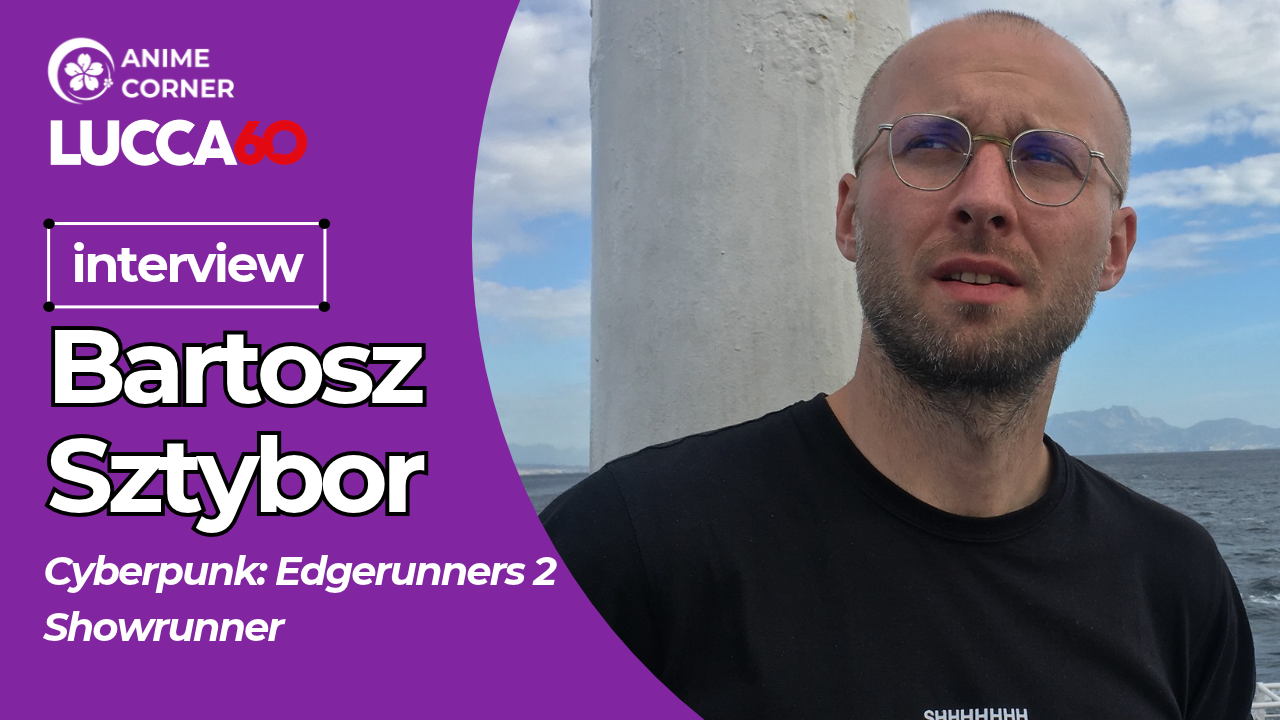
Following the CYBERPUNK: EDGERUNNERS 2 panel at Lucca Comics & Games, we sat down with showrunner Bartosz Sztybor to talk even deeper about Season 2 and its connection to other elements of the franchise. We talked about the creation process with Studio TRIGGER, how he deals with Cyberpunk‘s lore, and his insight into Roman, D, Capri, and other characters. Bartosz, who also writes the manga Cyberpunk: Edgerunners MADNESS with illustrator Asano, also commented on the connections between the different Cyberpunk media.
Just as in our previous interview about Season 1, we had a great time talking with Sztybor about the reasoning behind his writing decisions. With his particular humor, he is always open to sharing his thoughts—even at the risk of spoilers.

Portions of this roundtable have been edited for clarity. Beware of CYBERPUNK: EDGERUNNERS 1 and 2 plot spoilers below.
IGN: Given what you were talking about on the panel today, what are your thoughts right now on a potential Season 3?
Bartosz: While writing Season 1, I was already thinking about potential seasons and other stories, because there’s a lot of stories to tell. When I’m creating, I’m searching for answers to questions that I don’t know how to answer.
I knew that after Season 1 I didn’t answer all of those questions. There was a dream of creating more seasons. But—and it’s always like this with CDPR—only if there is a perfect story and perfect people to deliver it.
After Season 1, Studio TRIGGER said, “No, we are just too tired.” But here in Lucca Comics & Games, right after the release of Season 1 in 2022, we talked with Studio TRIGGER again and they said, “Okay, we are not that tired anymore, maybe we should do it.” I already had some ideas, so two months later, I presented a pitch to them. They didn’t want to do a classic sequel, and neither did CDPR nor did I. That’s why in the scene that you asked about we didn’t want to be straightforward. We wanted to do something different. So when I presented them my pitch for Season 2, they were super impressed. That’s why Season 2 happened.
I think that would be the same story with Season 3. I have some stories, but we need to see. If there is no studio or director with a vision like Ikarashi-san, it doesn’t make sense. We don’t want to do things that would be mediocre or not good enough. I’m also happy with how Season 2 completes Season 1. I think of them as a package that already works.
CGMagazine: You mentioned a bit in the talk about how writing for an anime is very much different than writing for a live action or a game. Could you tell us a bit about the process of going back and forth with Studio TRIGGER?
Bartosz: The process for Season 1 was like this: we were writing scripts and then sending them to Studio TRIGGER. We thought that they would just take the script and adapt it. But they said it’s not that easy to adapt because we didn’t know the anime rules. They considered the writing very “live action.” I think it’s not only live action because the goal for both Season 1 and Season 2 was to create an HBO narrative form for anime. We managed to preserve that, but there was back and forth. Then they were sending scripts with their ideas and their way of thinking about storytelling and narration.
With that experience, the process was easier and different for Season 2. I was creating a storyline or treatment, a 20-page document on how the story develops. Then for a year and a half we were meeting weekly.
I traveled to Japan to talk scene by scene. Sometimes it was about the differences between live action writing and anime writing. But very often it was about cultural differences. For me some scenes were about something and suddenly I was surprised that for them the same thing meant the opposite.
Anime Corner: During Season 2 we clearly witness David’s legacy. What legacy do you think these new characters will leave in Night City after Season 2’s finale?
Bartosz: Oh, I won’t tell you that [laughs]. I think there definitely will be a legacy. That’s what I was talking about. There are ideas not only for other seasons, but also for other media. I think maybe in other comic books that will be post Season 2. You will see what happened afterwards.
By the way, I’m glad that you saw that. Even if David Martinez is dead, the consequences of what he did are still here. That’s even one of the core elements of EDGERUNNERS as an IP: every choice has a consequence. Even if you are dead, three years later there are still people that were hurt by what you did—even if you did a good thing. That’s about the moral grayness of the whole world.
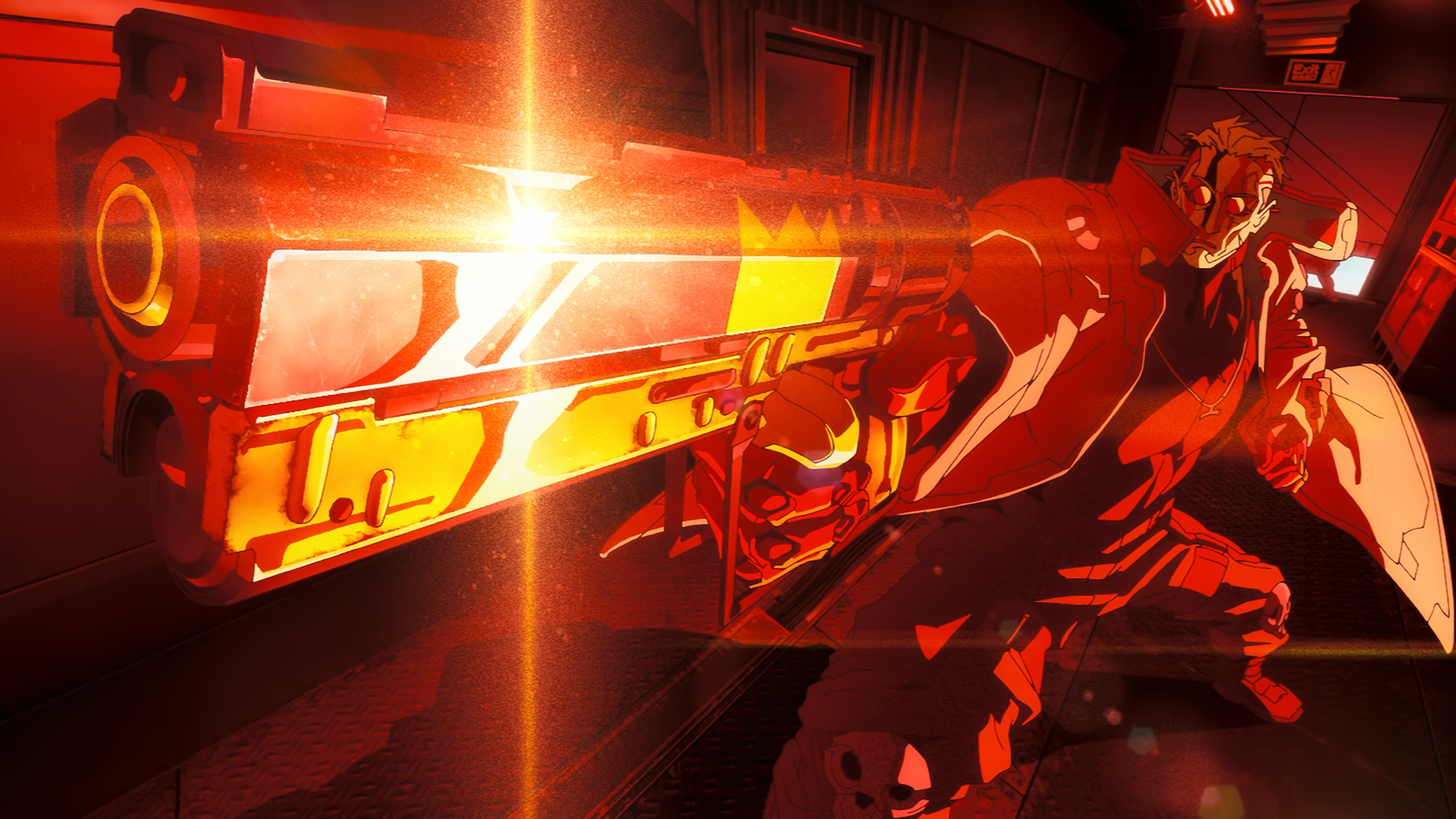
IGN: There have been a lot of eagle-eyed fans who have seen the data archive in EDGERUNNERS 2. There’s a wall of images and there’s one that looks like it may be the “female V.” Is that intentional or is something left for interpretation?
Bartosz: It’s left for interpretation. But also the dialogue that they are having there is very important. But yeah, it’s left for interpretation.
IGN: Is it important for you to include Easter Eggs from the game?
Bartosz: It’s not important at all. That’s why I wouldn’t call it “Easter Eggs.” I think that’s the way we are trying to create a franchise for Cyberpunk. We create stand-alone stories that are self-sufficient, that you can just read one comic book and you are having the catharsis and you don’t need to know any other comic book or game or other stuff. But we are putting those things there not as a fan service, but for the audience or the readers to feel that this world is alive. That’s why we don’t want to create anime or a comic book that will need the audience to read three other comic books and two TV shows in order to understand why this guy is a villain [laughs].
But I like to put those tiny things like Sal Bigelow in EDGERUNNERS 2, who was five years earlier in a comic book, Cyberpunk 2077: Big City Dreams. We are only adding those things if there’s a reason. We never think, “Oh, what we should put in this scene to make fans happy.” It’s all about building a bigger narrative.
CGMagazine: In the games, V can put in as much cyberware as they want and it has no impact, but no one else in the universe is allowed to do what they can. How do you get by the narrative distance from V being that special to what goes on in EDGERUNNERS?
Bartosz: I think V is not that special, but honestly, I don’t know. You can see that they also have flaws and that Johnny Silverhand has an impact on him. For example, with Cyberpsychosis and putting a lot of chrome into yourself, it’s not that there is a moment that you put 25 pieces of cyberware into yourself and you will get cyberpsychosis. For me, cyberpsychosis is like drug addiction or alcoholism—and I think that’s the proper approach. There are people that can put one piece of chrome and they will get cyberpsychosis. And others, like Adam Smasher, can have a lot of stuff and they will still be okay. It’s not always about being special or not.
Bleeding Cool: The Witcher is an older IP and therefore you’ve got the books, videogames and TV series. But it’s a different sort of start-up franchise. How much freedom do you have in terms of what you can do?
Bartosz: There is some freedom. With Cyberpunk, I don’t feel when we are creating stories that we are super tamed with things. It’s always about the logic of the world. It doesn’t make sense to suddenly jump into 2099 and do a story there that doesn’t connect in any way with other media. That’s why all the comic books for now are around 2076 and 2077. For the gamers, and the audience in general, that is the world they know right now. We were showing the other parts of Night City. But now with EDGERUNNERS 2, we are starting a different period of the IP. In terms of telling stories, I think there is a huge freedom.
Of course, there is lore and we can do some things. But it’s also not about “lore taming creativity.” I think having lore makes all the stories believable in a way. Our lore masters working in Cyberpunk have an amazing approach. When there is a suggestion, it’s not like the answer is “no,” but instead they propose to do something else that can help us to deliver the themes or the story that we want to do.
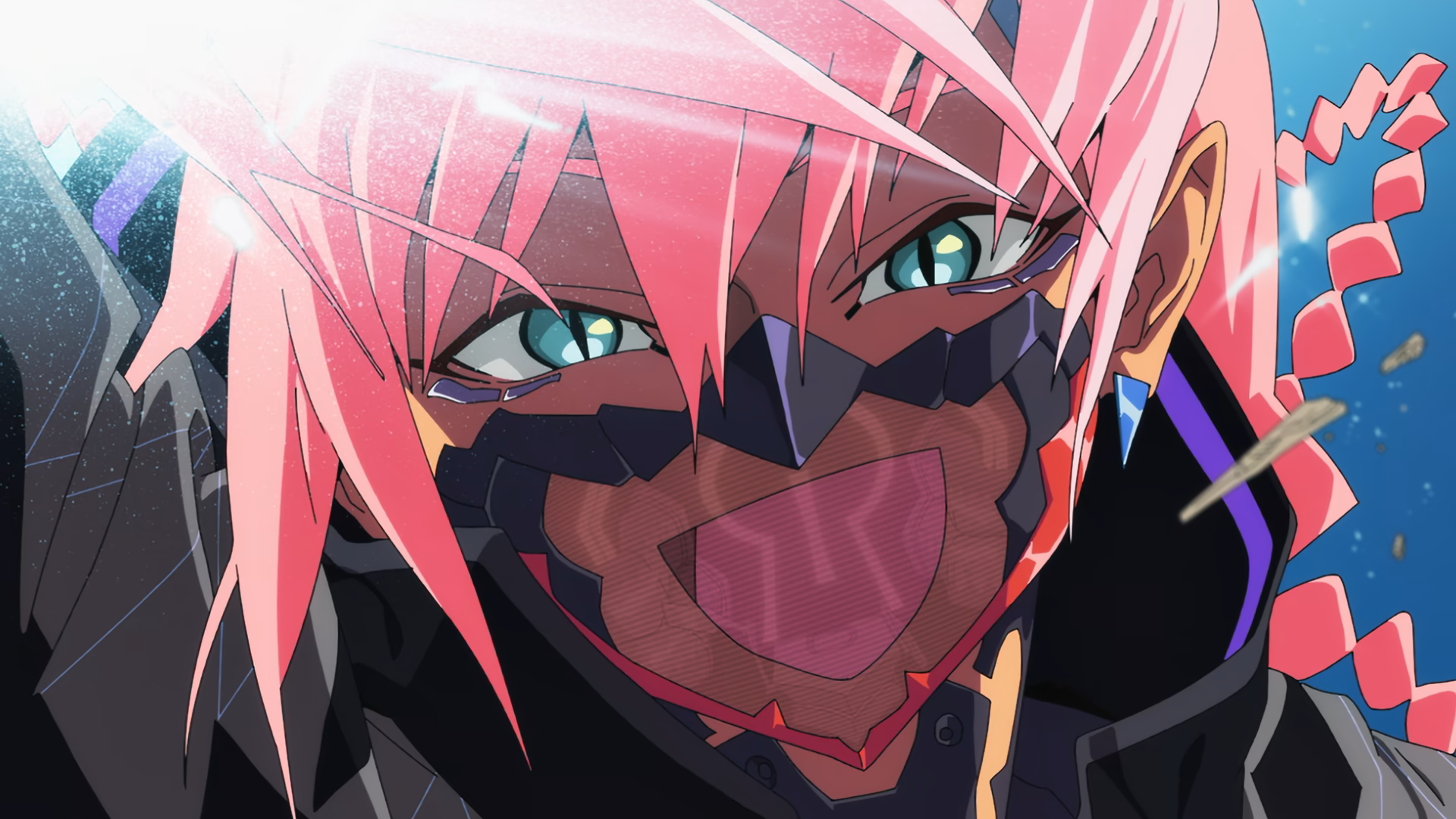
IGN: When you are setting something after Cyberpunk 2077, do you have conversations with CDPR about a canon ending for the game, or is it more abstract than that?
Bartosz: I’d say it’s both. It’s not super abstract, but we don’t want to set a canon ending. There were a lot of conversations with the lore team to see what we can do to somehow satisfy all the endings and what will be the state of the world after the game. That’s why in the scene that you asked about we didn’t want to be straightforward, but we are giving some suggestions. We will probably reveal the state of the world in more comic books and other stuff. There are discussions, but we are not setting a canon ending.
Anime Corner: I read an interview of Ikarashi-san commenting on D and Capri’s relationship, stating that they worked on their relationship early on. What similarities and differences can you find between D and Capri, and David and Lucy? Does Capri’s full name, Capricorn, have a special meaning because of her dual nature?
Bartosz: The meaning of Capri’s name is because I’m Capricorn, that’s the reveal. As for the relationship, yes, but it’s not only that D and Capri’s relationship is 100% the same relationship as David and Lucy. Season 2 is a mirror to Season 1. How David behaved and the things that pushed him into what he became: we are retelling those things in Season 2.
For example, the kid-mother relationship is shown in a different way and perspective in Season 2, now from a mother and father perspective. As for the relationship between David and Lucy, I would say it is retold, but not only through D and Capri. There are also some similarities in different characters, like Weak and Avida, because Weak represents what would happen to David if he stayed alive, and what would happen with Lucy too. Weak and Avida are not together anymore, for some reasons. So, to answer your question, I’d say yes and no.
IGN: As you’re writing things, is there a specific set canon for you or is it a little bit more variable than that?
Bartosz: There is canon, of course. But when we were creating EDGERUNNERS 1, and the multiple comic books and board games, the canon was before the video game. We knew the state of the world. For the things post-game, it’s not that there are “super detailed canon things,” but one important canon information is that Arasaka is weakened. And that’s it. It gives us a lot of opportunities to show the city in a different way. But it doesn’t make any of the ending canon.
IGN: Are you trying to stay away from things that would be too specific in terms of setting up new canon?
Bartosz: Yeah, it’s the same thing that I answered about the characters. That there are some IPs that are created in a particular way. I won’t mention the names. I think that the goal of CDPR, the way we want to create a franchise for The Witcher and Cyberpunk, is to create stand-alone stories. You have a graphic novel and you can read it from the start to finish. You don’t need to know anything about the world. But you can have some connections that build the world, that show you that this world exists. I prefer to create a franchise like that. I like fans who find those things.
There’s a comic book titled Cyberpunk 2077: You Have My Word, where there’s a fixer that you could see in EDGERUNNERS 1, and made cameos in other comic books. As a fan you can create their story and connect the dots. This is the best way to create a franchise, because you let the fans stay with the story, and keep them thinking about the story. You don’t give them all the answers. You just give them questions and they can connect things.
CGMagazine: Do you think that stories in the Cyberpunk universe might not have true happy endings, but they find catharsis in their own ways?
Bartosz: I don’t know. It happens just sometimes [laughs]. My answer always is that I’m trying to be sincere with myself and with the audience while creating this. I try to be realistic about the characters’ emotions. I’m true to the characters and I don’t use plot armors. I don’t think about the plot that you need to have this or that ending. There’s no rule or set of rules that help in creating that.
But on the catharsis, there are comic books like our Cyberpunk comic books, and other comic books too, that also play with that. You don’t have catharsis there and you end with a feeling of emptiness [laughs].
For me one important thing is to also subvert expectations. What I was saying during the panel is that I’m tired of the three-act structure. Pop culture right now doesn’t show us many new things and approaches to storytelling. I’m a guy that misses franchises like Alien, for example. Pop culture in the 80s and 90s was amazing, we had a lot of new ways of storytelling. That’s the way me and the whole studio want to create things.
Anime Corner: As for Roman, you commented that he shares your passion for cinema. For Season 1, you mentioned that your favorite character was Maine and that you see a lot of you in him. Did you also put your childhood memories or other experiences into Roman, outside his love for cinema?
Bartosz: Of course. Roman with the camera is me with the camera when I was 8 or 9 years old, going out with my childhood friends in Warsaw. We were trying to create big cinema, and we were doing bullet time before The Matrix [laughs], with the bullet on a rope that slowly goes through the screen. There’s a lot of me in him, like the passion and the innocence; not only my love for cinema. This character is very close to my heart.
Anime Corner: Did you expect these side characters, like Omi, Yuppie or Kyoko, to become this popular in the fandom?
Bartosz: Oh, yeah. I saw Omi is gaining so much attention and it’s amazing. I thought that Kyoko would be the fan favorite because her design is amazing. She’s such a character. So, I’m a bit surprised. I mean, Omi is cool. It’s always a surprise. I remember that after Season 1 and the huge love for Becca. I even checked Becca’s screen time, and I think it’s less than 10 minutes. It was such a huge surprise. We were wondering who will be the fan favorite from the main cast and from the secondary cast. Honestly, I didn’t think it would be Omi. I understand that because the design is cool. But I would put my money on Kyoko here.
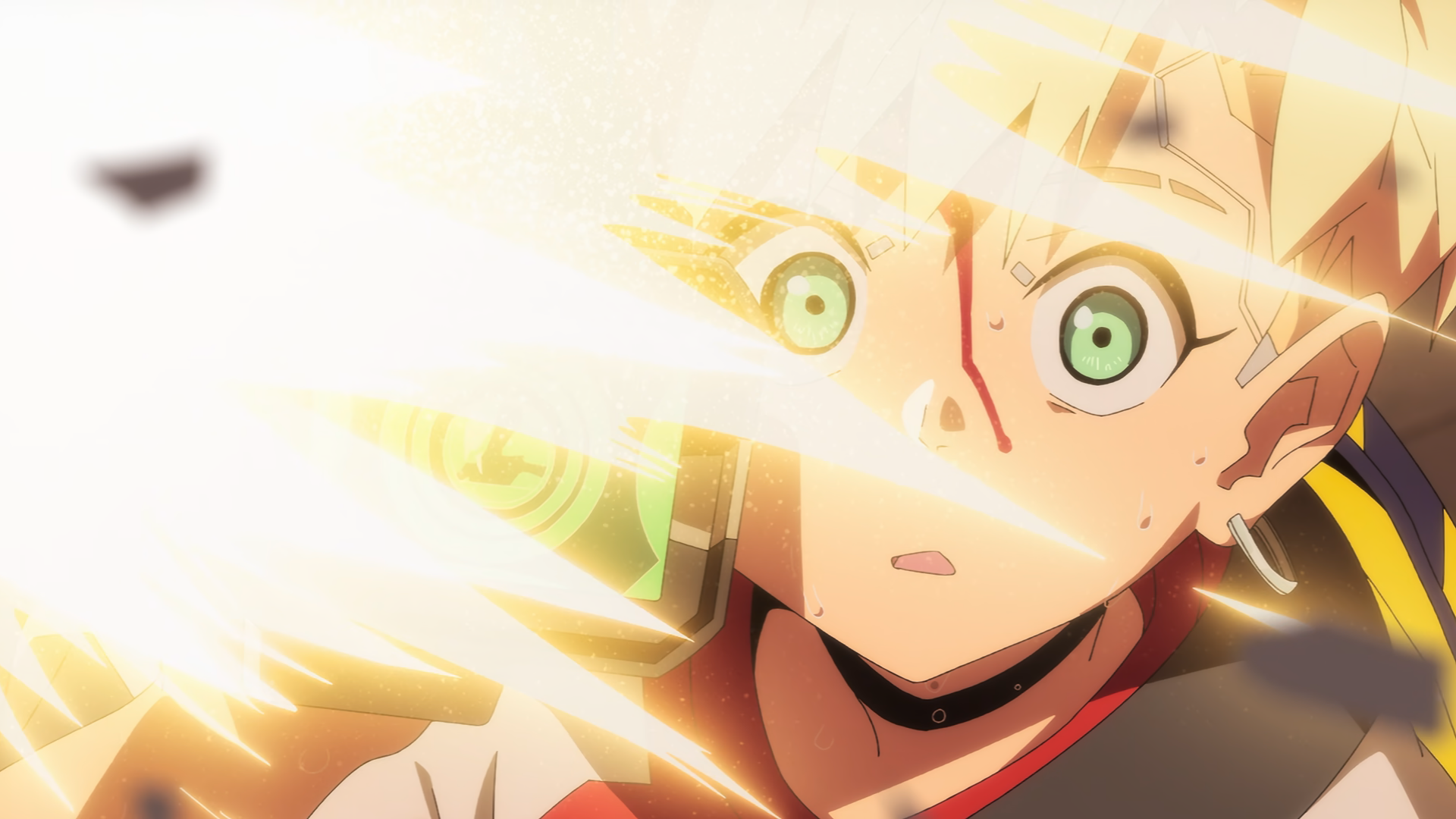
We want to extend our thanks to Bartosz Sztybor and CD PROJEKT RED for taking the time to discuss the latest season with his tight schedule—he left the convention the same afternoon. We hope to have the chance to talk about any potential season or projects.
You can also check our photography session with CDPR’s official cosplayer miciaglo, who cosplayed Talia Yang from Season 2 during Lucca Comics & Games.
About Lucca Comics & Games
Lucca Comics & Games is one of the biggest conventions in the world, taking place over five days in the historical center of the medieval Italian city of Lucca. The convention features a wide range of industries, including movies, series, video games, tabletop games, comics, anime, manga, cosplay, with their respective international guests.
The city itself is transformed for the festival, so every genre and company has a dedicated premise and whole blocks are transformed into comic hubs, tabletop zones, video game booths, and more.
Images: ©Cyberpunk: Edgerunners © 2026 CD PROJEKT S.A.

Join the discussion
Comments are linked to your Anime Corner account and published after moderation.
Sign in to comment
Use your Anime Corner Portal account across all Anime Corner services.